
Chest Pain: When Should You Go for an ECG Test?
Chest Pain and Its Importance
Chest pain can feel like pressure, burning, tightness, or even a dull ache. Sometimes it’s harmless—like acid reflux—but other times, it could signal something life-threatening, such as a heart attack. So how do you know when it’s serious?
Every year, millions of people seek medical care for chest pain, making it one of the most common reasons for emergency visits. Ignoring it isn’t a risk worth taking.
At Cheers Medical Diagnostic, we specialize in accurate and timely chest pain ECG test services to help detect heart-related issues early. If you’re experiencing symptoms, you can learn more about our Diagnostic Services in Lagos, Nigeria and take proactive steps toward your heart health.
What Is an ECG Test?
An ECG (electrocardiogram) is a simple, non-invasive test that records the electrical activity of your heart. Think of it as a “snapshot” of your heart’s rhythm and function.
It helps doctors:
- Detect irregular heartbeat (palpitations)
- Identify signs of a heart attack
- Evaluate chest pain symptoms
Why ECG for Chest Pain Matters
When it comes to chest pain, time is everything. An ECG for chest pain can quickly reveal whether the cause is cardiac or non-cardiac.
It helps diagnose:
- Heart attack or angina
- Arrhythmias (irregular heartbeat)
- Reduced blood flow to the heart
Early detection can literally save your life.
Common Chest Pain Symptoms to Watch
Not all chest pain feels the same. Be alert to these warning signs:
- Chest tightness or pressure
- Shortness of breath
- Pain spreading to arms, neck, or jaw
- Sweating or dizziness
- Chest pain and irregular heartbeat
If you notice these, don’t wait—seek medical attention immediately.
Bone Fractures and Broken Bones
Acute Chest Pain
- Sudden and severell
- Often linked to emergencies like heart attacks
- Requires immediate ECG within 10 minutes
Stable Chest Pain
- Occurs during exertion
- Predictable pattern
- Still needs evaluation but less urgent
Understanding this difference helps in proper cardiac risk stratification.
When Should You Get an ECG for Chest Pain?
So, when should you get an ECG? Here are clear scenarios:
Immediate ECG Needed
- Sudden chest pain lasting more than a few minutes
- Pain with shortness of breath
- History of heart disease
- Fainting or severe weakness
Non-Emergency but Important
- Mild but recurring chest discomfort
- Chest pain during physical activity
- Unexplained fatigue or palpitations
ECG Within 10 Minutes: Why Timing Is Critical
Medical guidelines recommend performing a 12-lead ECG within 10 minutes of arrival in emergency settings for chest pain.
Why? Because:
- Heart damage progresses quickly
- Early diagnosis improves survival rates
- Faster treatment reduces complications
What Happens During a Chest Pain ECG Test?
The process is quick and painless:
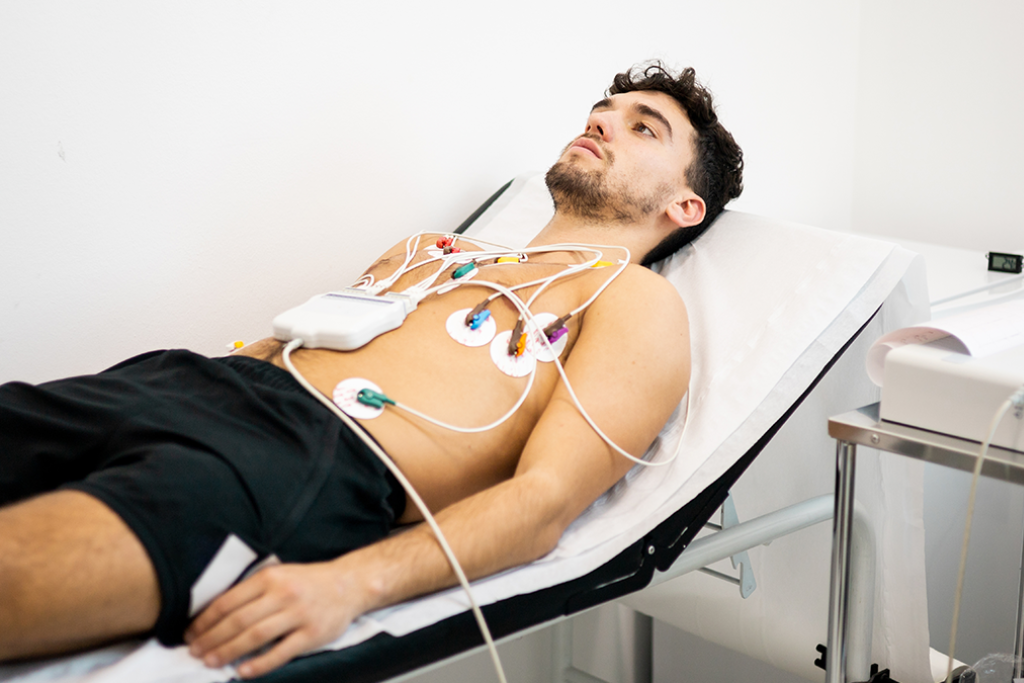
- Electrodes are placed on your chest, arms, and legs
- The machine records electrical signals
- Results are generated within minutes
No needles. No discomfort. Just vital insights into your heart.
Understanding ECG Results
An ECG can show:
- Normal heart rhythm
- Signs of heart attack
- Abnormal rhythms
- Reduced oxygen supply
Doctors may recommend further testing if abnormalities are detected.
Other Tests Alongside ECG
An ECG is often paired with:
- High-sensitivity troponin test – detects heart muscle damage
- Imaging tests like echocardiograms
- Stress tests
According to research, combining ECG with troponin testing can safely rule out heart attacks in many low-risk patients.
Low-Risk Chest Pain vs High-Risk Cases
Low-Risk Chest Pain
- Normal ECG
- No major risk factors
- Often non-cardiac
High-Risk Chest Pain
- Abnormal ECG
- Severe symptoms
- Requires urgent care
Proper evaluation ensures no serious condition is missed.
Who Is More at Risk?
Certain factors increase your risk:
- Age above 40
- Smoking
- High blood pressure
- Diabetes
- Family history of heart disease
If you fall into these categories, don’t ignore even mild chest pain.
Preventing Serious Heart Conditions
Prevention is always better than cure:
- Eat a heart-healthy diet
- Exercise regularly
- Manage stress
- Get regular health checkups
You can explore our ECG test services to monitor your heart health proactively.
When Chest Pain Needs Urgent Evaluation
Seek immediate help if you experience:
- Crushing chest pain
- Difficulty breathing
- Loss of consciousness
- Pain radiating to other body parts
For trusted medical guidance, refer to global authorities like the
World Health Organization for heart health awareness.
Call to Action
Don’t take chances with your heart. If you’re experiencing symptoms, book your chest pain ECG test today and get clarity within minutes. Early diagnosis can save lives—possibly yours.
Why Choose Us?
At Cheers Medical Diagnostic, we offer:
- Fast and accurate ECG testing
- Experienced medical professionals
- Advanced diagnostic equipment
- Patient-focused care
Take control of your health today with our trusted ECG test in Lagos
Conclusion
Chest pain is your body’s way of signaling that something might be wrong. Whether it’s mild discomfort or severe pressure, knowing when to get an ECG for chest pain can make all the difference.
Don’t ignore the warning signs. Get evaluated, stay informed, and prioritize your heart health—because every second counts.
FAQs
If it’s sudden, severe, or accompanied by shortness of breath or dizziness, seek immediate care.
Ideally, within 10 minutes in emergency situations.
No, but it’s a critical first step in diagnosing many conditions.
Not at all—it’s quick, safe, and completely painless.
Acute is sudden and severe; stable is predictable and often triggered by activity.